Supply chain and responsible sourcing
Bringing good to our global supply chain
At General Mills, we are responsible for maintaining high standards not only in our own operations, but also across our value chain. Our supplier base is large, complex and global, with thousands of suppliers in more than 40 countries. Through our Global Responsible Sourcing program, we uphold our Supplier Code of Conduct and drive ongoing supplier progress in the areas of health and safety, human rights, business integrity and the environment. This increases our influence to protect and respect the people who supply, transform and manufacture the goods and services we use to make our products.
Some of our milestones:
1990s: We were an early adopter of responsible sourcing and developed a program for producing premiums and supplier facilities.
2008: Launched the program in our own locations and co-packer facilities.
2014: Expanded the program to include high-risk locations of our Tier 1 suppliers.
2021: Added more Tier 1 suppliers in North America, while expanding to locations in Asia, Latin America, Europe and Australia.
2023: Piloted the integration of responsible sourcing into the company's formal sourcing bid and supplier award process
2024: Expanded the program to include some high-risk indirect Tier 1 suppliers
Eliminating deforestation through responsible sourcing and packaging
No Deforestation
At General Mills, we recognize that eliminating deforestation and preserving forest ecosystems are essential to meeting our climate commitment. To drive positive outcomes for both people and planet, we are focused on forest-positive strategies for commodities linked to potential deforestation risk and where we can make a meaningful impact.
In 2024, in alignment with Forest, Land, & Agriculture (FLAG) Guidance from the Science Based Targets Initiative (SBTi), General Mills committed to no deforestation across its primary deforestation-linked commodities —palm, cocoa, & fiber (pulp & paper) packaging—with a target date of December 31, 2025. See our No Deforestation Statement for details.
Palm oil
We recognize that purchasing practices and cross-sectoral collaboration toward deforestation-free palm oil can positively impact ecosystems and people as well as drive progress toward our science-based target and reduce Scope 3 GHG emissions. Learn more about how we source Palm Oil.
Cocoa
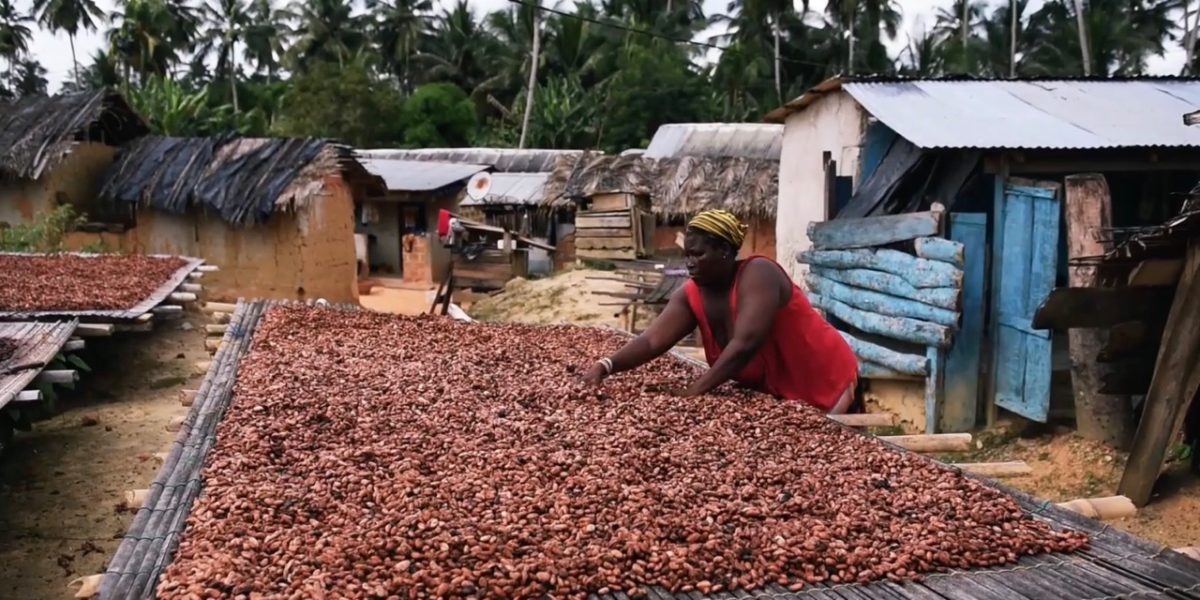
We work closely with NGOs and supplier partners’ programs on the ground in key cocoa-growing regions to support sustainable sourcing programs and landscape initiatives with a focus on protecting and restoring natural ecosystems, strengthening smallholder farmer livelihoods, empowering women, preventing and remediating child labor, and advancing climate-smart agriculture. Learn more about our approach to cocoa sourcing and partnerships.
Fiber packaging
The majority of carton and corrugated fiber packaging we sourced is recycled material.* Virgin sources make up 19% of our supply chain; of that 92% is certified to pulp origin and 99.9% is traceable to one or more countries of origin.
Today, 99.6% of our volume is considered low-risk for deforestation. This volume is sourced from recycled materials, PEFC/FSC certified virgin materials, or virgin materials from countries considered low-risk for deforestation. We are continuing to work to close traceability gaps for the remaining 0.4%.
*2024 Supplier survey representing 99.6% of global volumes.
See what we’re cooking up
Get the latest on company and brand news, financial performance, sustainability reports, and more.